The archaeological remains of ancient Gandhara are concentrated along the southern foothills of the Hindu Kush and Karakoram ranges, extending across the Peshawar Valley in northern Pakistan to the eastern bank of the Indus River, and into the eastern reaches of the Kabul Valley in present-day Afghanistan. Situated at the crossroads of the Silk Road and the Indian subcontinent, this region served as a vital conduit for cultural exchange, where Mediterranean, Iranian, Central Asian steppe, and Indian civilizations converged.
Through centuries of interaction, these diverse traditions gave rise to a dynamic and richly layered cultural landscape. Elements of ancient Greek mythology, aesthetics, and philosophy mingled with Zoroastrian and Messianic beliefs from West Asia, alongside the religious traditions of Hinduism and Buddhism from South Asia. Gandhara thus emerged as a major center of religious and artistic development, particularly renowned for its pivotal role in the formation of Buddhist art. Its artistic legacy would go on to exert a profound influence on the transmission of Buddhist culture across Central Asia and into China.
From March to June 2023, the Palace Museum, in collaboration with the Department of Archaeology and Museums, National Heritage and Culture Division of Pakistan, presented the exhibition Fragrant Like Mount Sumeru: The Art of Gandhara. The exhibition brought together 203 artifacts, including 173 objects from seven museums across Pakistan—namely the National Museum of Pakistan, Taxila Museum, Peshawar Museum, Islamabad Museum, Dir Museum, Swat Museum, and Hund Museum—alongside 30 sets of works from the Palace Museum’s own collection.
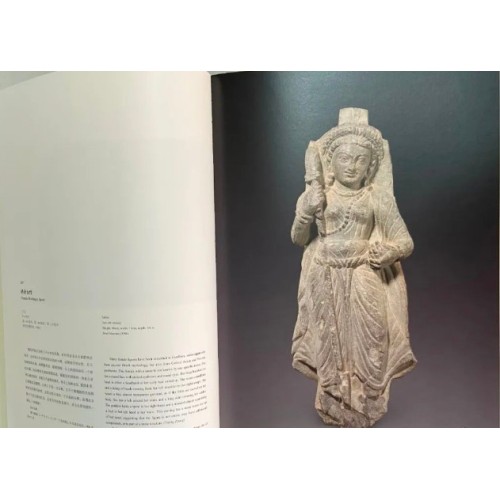
Dating from the 2nd century BCE to the 10th century CE, many of the Pakistani artifacts were unearthed through archaeological excavations. The exhibition features an array of renowned Gandharan stone carvings, including early Buddhist bodhisattva sculptures, narrative reliefs depicting the life of the Buddha and Jataka tales, as well as architectural elements from stupas. These are complemented by exquisite examples of gold and silverware and jewelry, together illustrating the stylistic diversity and distinctive aesthetic of Gandharan art within its broader multicultural context.
The 30 objects from the Palace Museum were largely transmitted from the ancient Gandhara region into western China’s Tibet Region via important artistic centers along the Silk Road, such as Swat and Kashmir. These works significantly influenced the development of gold and copper sculpture traditions in the ancient Guge Kingdom, offering tangible evidence of the long history of artistic and cultural exchange between China and Pakistan.
Organized into three thematic sections—Land of Fragrance: The Birth of Gandhara Civilization under Multiculturalism, The Splendor of Gandhara Art, and The Echoes of Gandhara Art—the exhibition presents a comprehensive narrative of Gandhara’s cultural evolution, highlighting both its artistic achievements and its far-reaching influence.
This volume serves as the official catalogue of that landmark exhibition, fully illustrated in color with texts in both Chinese and English.