

A Society Without Fathers or Husbands: The Na of China by anthropologist Cai Hua is a landmark study of the Na people of southwestern China and their distinctive system of kinship and family organization. Based on extensive ethnographic research, the book examines a society in which the maternal household, rather than the married couple, traditionally forms the central unit of family life. Brothers and sisters remain within their maternal families, sharing domestic responsibilities and contributing to the upbringing of children, while inheritance and family continuity follow the maternal line. Intimate relationships between men and women do not necessarily involve marriage or the establishment of a shared household. Through a detailed analysis of kinship, reproduction, and social organization, Cai Hua challenges conventional anthropological assumptions about the universality of marriage and the institutional roles of husbands and fathers. Rather than treating the nuclear family as a universal model, he explores how a society can maintain social continuity and organize family responsibilities through a different set of relationships. The book is particularly valuable for scholars of social anthropology, kinship studies, and comparative family systems, offering a provocative perspective on the diversity of human social organization.
To compare with A Society Without Fathers or Husbands? by Zhou Huashan, these two works provide complementary perspectives on one of the most distinctive kinship systems in China. Cai Hua approaches Na society primarily through the theoretical framework of social anthropology, questioning whether institutionalized marriage and conventional fatherhood are necessary foundations of family organization. Zhou Huashan places greater emphasis on cultural interpretation, gender relations, and the lived experiences through which Mosuo people understand their families and relationships. While Cai Hua investigates the structural logic of a society organized around maternal kinship, Zhou explores the meanings, values, and misconceptions associated with this way of life. Both books challenge the assumption that the nuclear family is the universal or inevitable model of human social organization, demonstrating instead that kinship, intimacy, and responsibility can take different forms across cultures. At the same time, their accounts invite readers to distinguish between formal social conventions and the diverse realities of individual lives. Together, they offer valuable resources for understanding matrilineal societies, comparative family studies, gender anthropology, and the cultural diversity of southwestern China, while encouraging a broader reconsideration of marriage, parenthood, and the many ways human communities organize their social worlds.
2008, Zone Books, paperback, 506 pp., used in a good condition.
| Book Details | |
| Author | Cai Hua |
| Publisher | Zone Books |
| Publication Date | 2008 |
| ISBN | 9781890951139 |
| Format | softcover |
| Dimensions | 15*23cm |
| Pages | 506 |
| Language | English |
| Condition | Used in a good condition |
A Society Without Fathers or Husbands: the Na of China, by Cai Hua
- Publisher: Zone Books
- ISBN: 9781890951139
- Availability: In Stock
-
US$25.00
Related Products
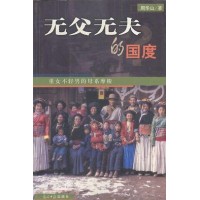
A Society Without Fathers or Husbands? by Zhou Huashan
In A Country Without Fathers or Husbands? Author and researcher Zhou Huashan explores the traditiona..
US$10.00
Tags: A Society Without Fathers or Husbands: the Na of China, by Cai Hua